Grid Connection Delays? How Battery Storage Gives Your Site More Power
Getting more power from the grid has become one of the biggest hidden brakes on business growth in the UK. Ofgem has reported that applications for new demand connections rose from 41GW in November 2024 to 125GW by June 2025, almost three times Britain’s peak electricity demand. Data centres alone account for around 73GW of that queue. Ofgem is now reforming the demand connections process, with decisions on its latest proposals expected by the end of 2026.
Most businesses aren’t applying for hundreds of megawatts, but the pressure on the network is felt at every level. If you’ve asked your network operator for a bigger grid connection to add new machinery, electric vehicles or cold storage, you may already have met long timescales and high quotes.
Battery storage offers another route. Instead of waiting for more power to arrive from the grid, you store energy on site and release it exactly when your business needs extra capacity.
The hidden limit: your site’s power capacity
Every business has an agreed maximum amount of power it can draw from the grid at any moment. For years, many sites never came close to it. That is changing fast as businesses:
- Add new production lines or larger machinery
- Electrify vehicle fleets and forklift trucks
- Expand cold storage, refrigeration or HVAC
- Grow IT and data processing loads
When a site’s demand starts pushing against its power capacity, the usual answer is a connection upgrade. Depending on the location, that can mean new cables, a new substation and a long wait while the network catches up.
How battery storage adds power capacity
A battery energy storage system sits behind your existing connection and works alongside it. The principle is simple:
- When your site is using less power than its connection allows, the battery charges from the grid or from on-site solar.
- When demand rises above what the connection can supply, the battery discharges and tops up the power available to your equipment.
- The energy management system (EMS) handles this automatically, watching your site’s load in real time and deciding when to charge and when to support it.
In effect, the battery lets you use your existing grid connection more fully across the whole day, and gives you extra power when you need it. This is what we call site energy management: making the power you already have work harder.
Battery support is limited by how much energy is stored, so sizing is critical. A battery is ideal where higher demand comes in periods, such as a shift start, a charging window or a process cycle, rather than as a permanent step change. A look at your site’s half-hourly energy data will show whether storage can cover the gap.
Adding solar: more power from your own roof
Pairing storage with solar PV adds another source of power that doesn’t depend on your grid connection at all. Solar generates during the day, the battery stores any surplus, and the energy management system uses both to support your busiest periods.
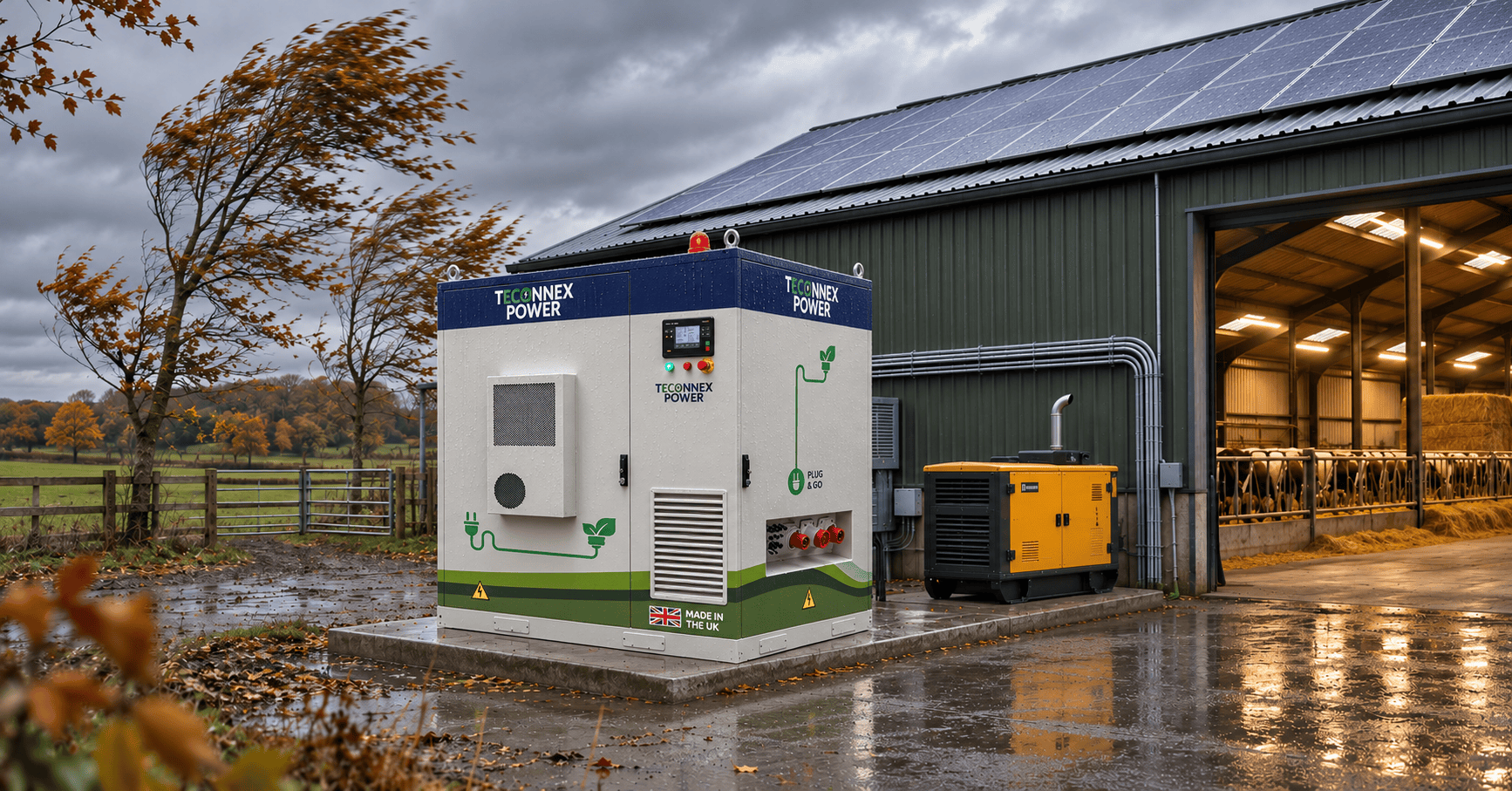
For sites with large roofs, such as warehouses, factories and farm buildings, solar and storage together can make a real difference to the grid capacity you need.
Data centres and critical sites: working with generators and CHP
Data centres, healthcare facilities and process sites often already have standby generators or combined heat and power (CHP) on site. These are valuable assets, but they can’t respond instantly to sudden changes in demand.
A battery energy storage system complements them:
- Instant response. The battery reacts in milliseconds, covering load changes while generators or CHP adjust.
- Generator hybrid operation. The battery handles smaller loads and short spikes, so generators run more steadily and only when they’re needed.
- Backup power. If the grid fails, Teconnex Power systems switch essential loads to battery power in 15 milliseconds.
Where grid power is limited, combining storage with existing on-site generation can give a critical site the extra headroom it needs.
Logistics and warehousing: power for electrification
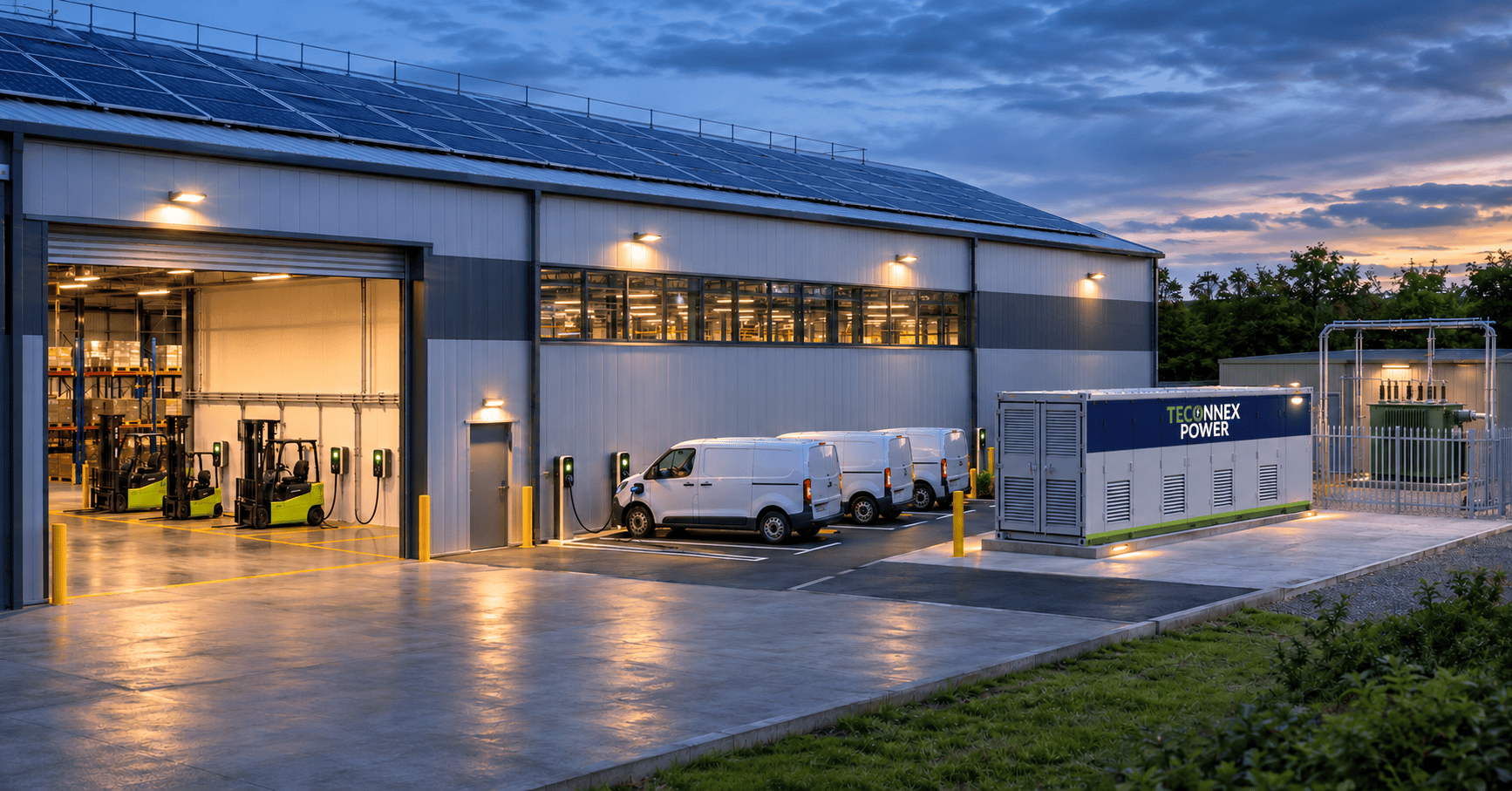
Warehouses are a clear example of where grid capacity is coming under strain. Electric forklifts, electric vans and HGVs, automated systems and temperature-controlled zones all need more power, often at the same times of day.
At the same time, warehouses have two big advantages:
- Large roof areas, ideal for solar PV
- Constant energy demand, so energy generated and stored on site is used rather than wasted
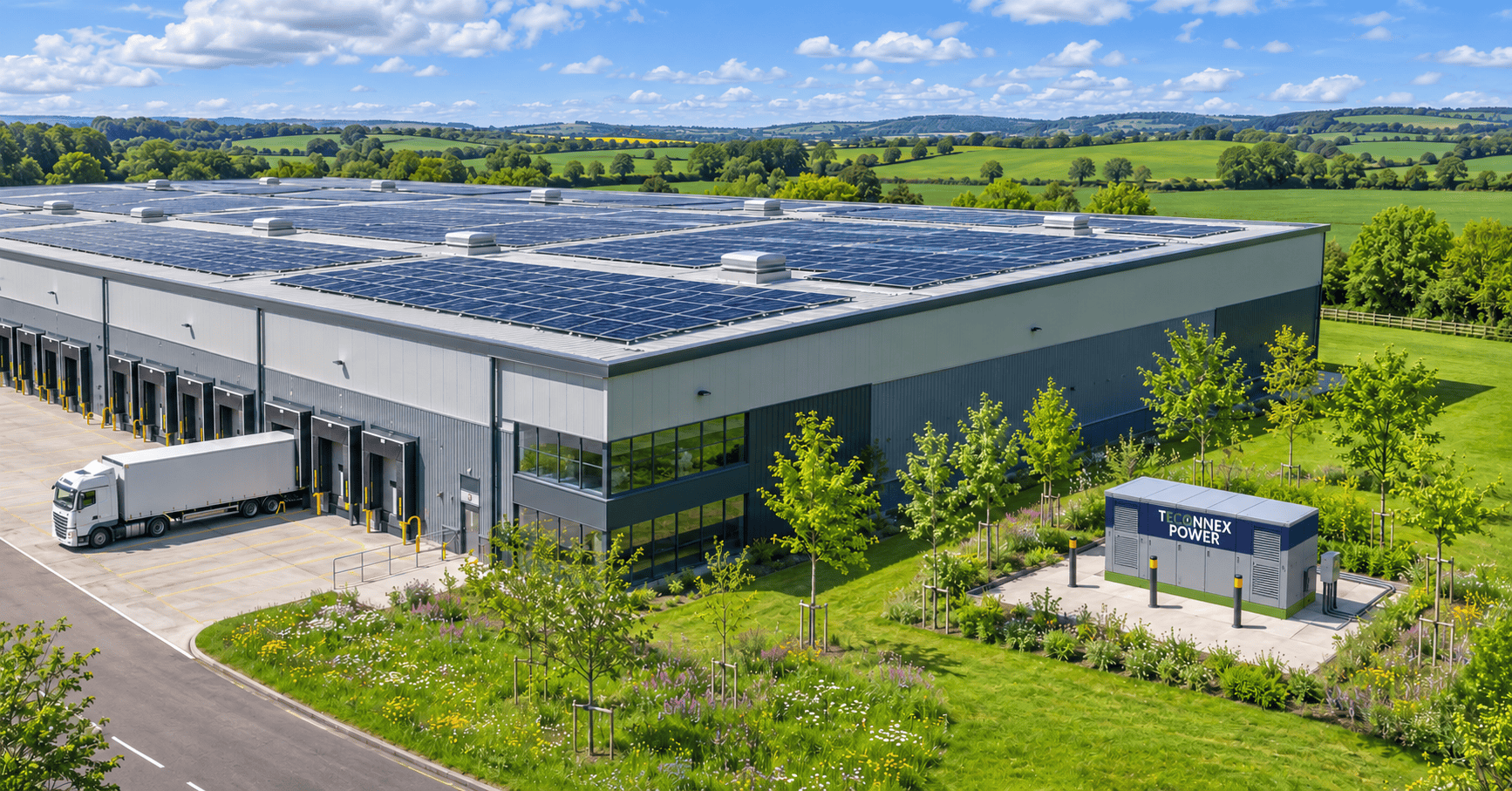
Combining solar, battery storage and smart energy management can take a site a long way towards independence from the grid, and can help a business electrify without waiting for a connection upgrade.
What to check before you start
If you’re considering commercial battery storage to deal with grid connection limits, these steps will help:
- Know your connection. Find out your agreed capacity and how close your site already comes to it.
- Gather your energy data. Half-hourly consumption data shows when and for how long demand rises above your limit.
- Plan for growth. Think about the equipment you’ll add over the next five years, not just today.
- Talk to your network operator. Battery systems connected to the grid need approval under the G98 or G99 process, which a good supplier will help you manage.
- Choose a scalable system. Modular storage lets you add capacity as your needs grow.
Expand your energy capability with Teconnex Power
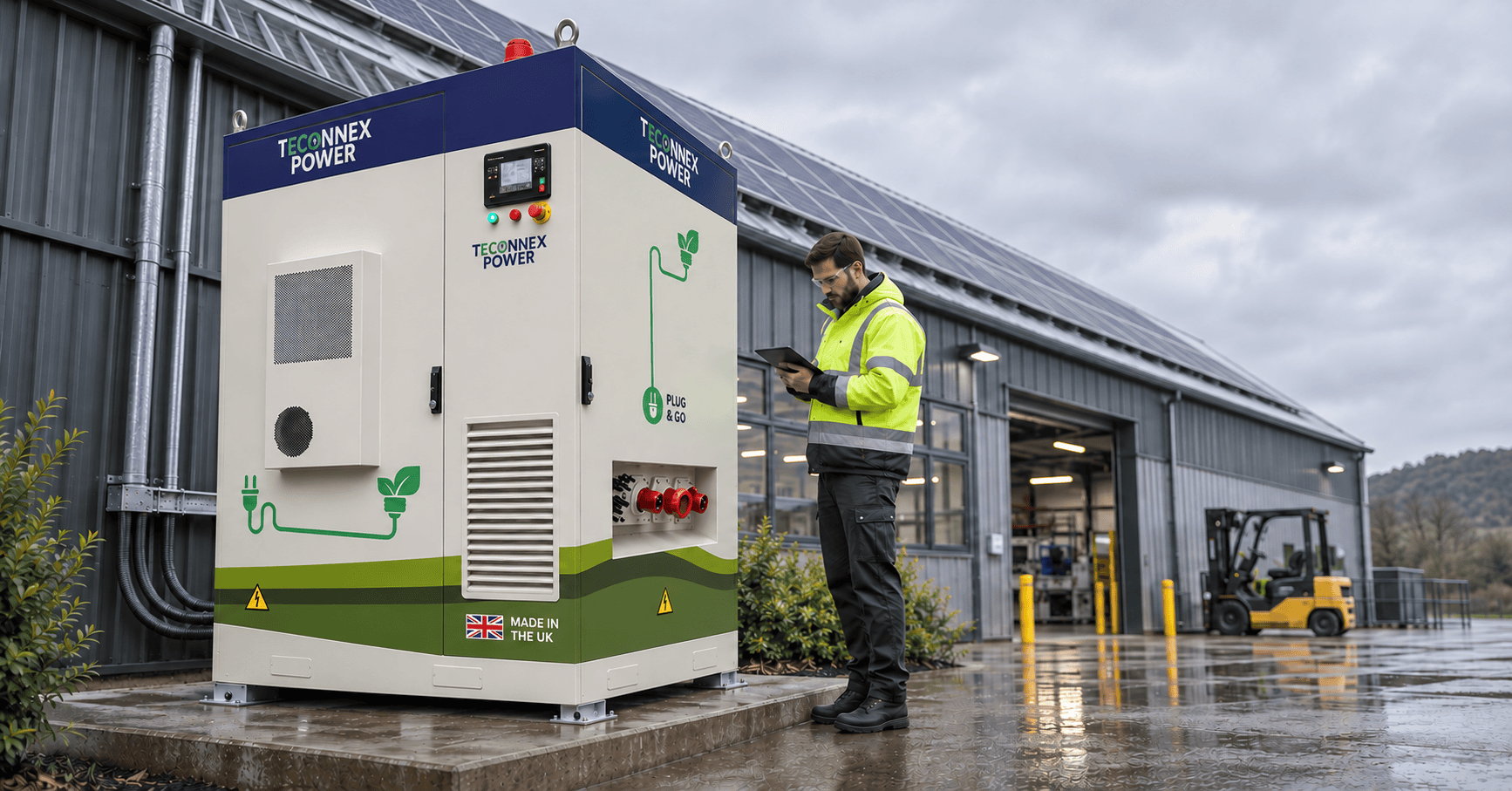
Teconnex Power energy storage systems are designed and manufactured in the UK and cover 25kWh to 1MWh, from compact outdoor cabinets to containerised systems. They’re modular, so you can start with what you need and expand as your business grows. Every system comes in an IP55-rated outdoor cabinet and includes an intelligent energy management system, ComAp remote monitoring and fire suppression as standard, and is G98/G99 compliant.
Our UK team supports you from consultation and site survey through to installation, commissioning and ongoing maintenance. Batteries and inverters carry a five-year warranty, with one year on all other components.
Frequently asked questions
What is grid connection capacity?
Grid connection capacity is the maximum amount of power your site is allowed to draw from the electricity network at any one time. It’s agreed with your network operator and limited by the cables, transformers and equipment that supply your site. Going beyond it usually requires a connection upgrade.
Can battery storage increase my site’s power capacity?
Yes, for periods when demand is higher than your connection allows. The battery charges when your site is using less power, then discharges to top up supply when demand rises. How much extra power it provides, and for how long, depends on the battery’s size and your site’s load profile.
Do I need permission to install battery storage?
Battery systems that connect to the grid need approval from your local network operator under the G98 or G99 process, depending on size. Planning permission may also be needed for larger installations. A good supplier will guide you through the process as part of the project.
Can battery storage replace a grid connection upgrade?
Sometimes. Where extra demand comes in shorter periods, battery storage can delay an upgrade or reduce the size of the upgrade you need. Where demand rises permanently, an upgrade may still be required, but storage can keep the business moving while you wait.
Talk to the Teconnex Power team
If your site’s grid connection is holding your plans back, we’d be happy to help. Our UK team can review your energy data, identify where you’re hitting your limits and recommend a battery storage system sized for your business.
Email sales@teconnex.com or send us an enquiry to arrange a conversation with the Teconnex Power team.
Sources
- HLC – Ofgem launches consultation on reforms to overhaul demand connections
- Linklaters – Unlocking the queue? Ofgem’s proposed reforms for data centre connections (September 2026)
Talk to our UK team
More news and guides