Commercial Battery Storage: The Key Features UK Businesses Should Look For
Energy resilience has moved from the facilities team’s wish list to the boardroom agenda. When a fire at the North Hyde substation in west London cut power in March 2025, Heathrow closed for a full day, and the knock-on effects showed how quickly one grid fault can spread across businesses and infrastructure. The government has since committed to publishing an Energy Resilience Strategy in 2026, with most of its North Hyde actions due by the end of the year. Operators of commercial, industrial and critical sites are also being urged to test their emergency power plans as extreme weather and network faults put site-level resilience under the spotlight.
For many UK businesses, the answer is commercial battery storage. But not all systems are built the same. This guide explains the features that matter most when you’re choosing a commercial battery storage system, and what to ask any supplier before you buy.
Why commercial battery storage is on more UK shortlists
A battery energy storage system (BESS) stores electricity from the grid, solar PV or a generator and releases it when your site needs it. For businesses, the most valuable job it does is keep critical operations running when the grid doesn’t. That applies across sectors from agriculture and manufacturing to healthcare, logistics and retail.
The UK’s energy system is changing fast. Grid-scale battery capacity reached 7.5GW by the end of 2025, and the National Energy System Operator (NESO) has met its first target for bringing industrial and commercial flexibility into electricity markets. Storage is no longer a niche technology. It’s becoming a normal part of how British businesses manage power.
That means more choice, and more need to compare systems properly. These are the features worth looking at closely.
1. Fast, automatic backup power
The whole point of backup power is that your operations don’t notice the grid has gone. Look for a commercial battery storage system with a static transfer switch (STS) that moves essential loads onto battery power automatically.
Transfer speed matters. Teconnex Power systems switch to battery power in 15 milliseconds, fast enough to keep most production lines, IT, refrigeration and control systems running without a restart. Ask suppliers for their tested transfer time, not a “typical” figure.
It’s also worth checking whether the system can run your site independently for a period (island or off-grid operation), and whether it can work alongside an existing generator.
2. Safe, long-life battery chemistry
Most modern commercial battery storage uses lithium iron phosphate (LFP) cells. LFP is widely chosen for commercial and industrial sites because of its thermal stability and long cycle life compared with other lithium-ion chemistries.
Chemistry is only half the story. A good battery management system (BMS) should monitor the system at cell, module and rack level. It should cover voltage, temperature and state of charge, and provide protection against over-voltage, over-current and short circuits. This layered monitoring is what keeps a battery safe and working well for years.
3. Fire detection and suppression as standard
Fire safety should never be an optional extra on a battery energy storage system. Check that the cabinet includes:
- Heat, smoke and gas detection
- An integrated fire suppression system
- Visual and audible alarms
On every Teconnex Power ESS, fire suppression is fitted as standard, together with heat, smoke and gas detection and alarms. When you compare quotes, make sure you’re comparing like for like. Some systems list fire suppression as a paid upgrade.
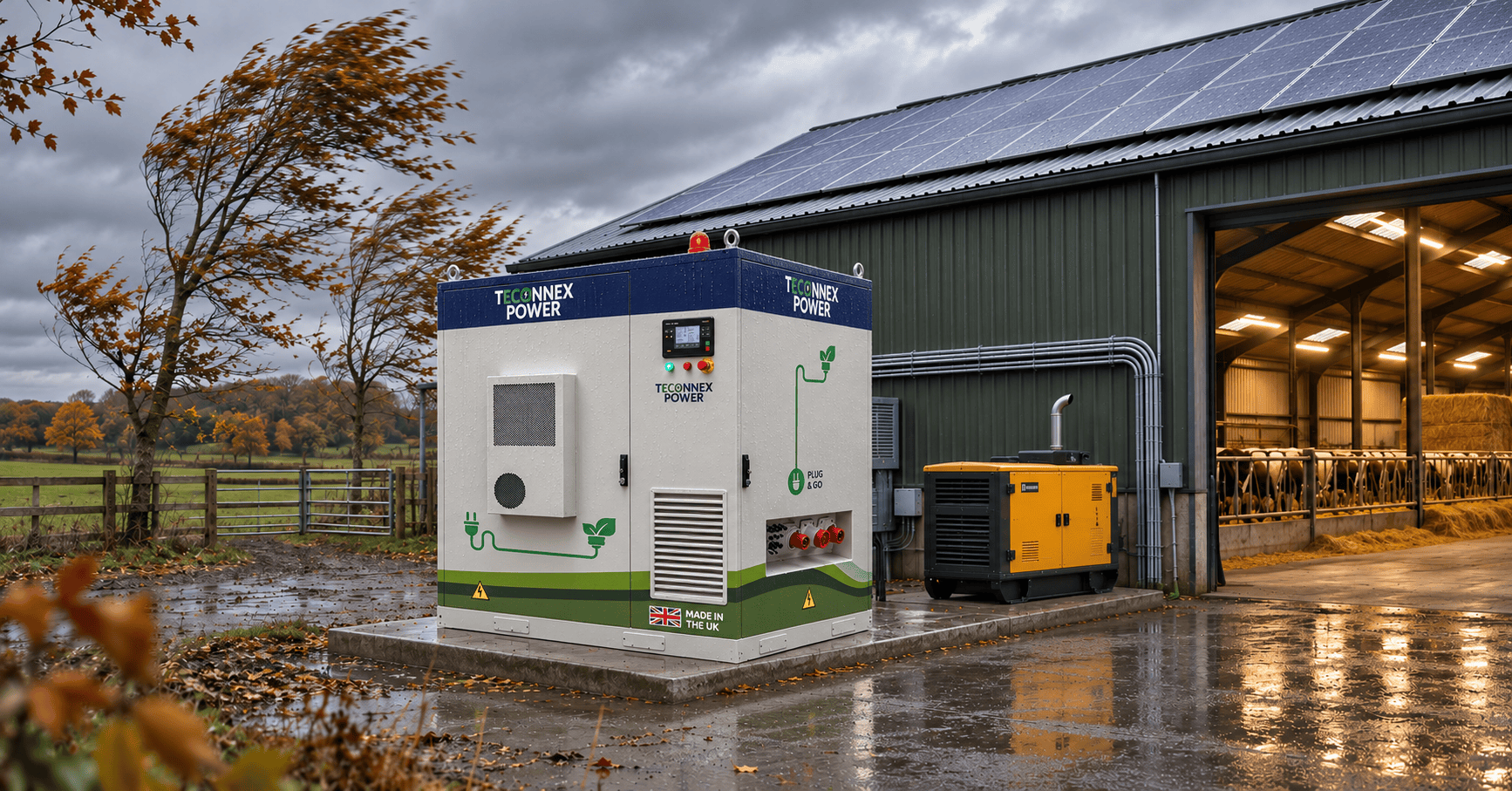
4. A cabinet built for UK outdoor conditions
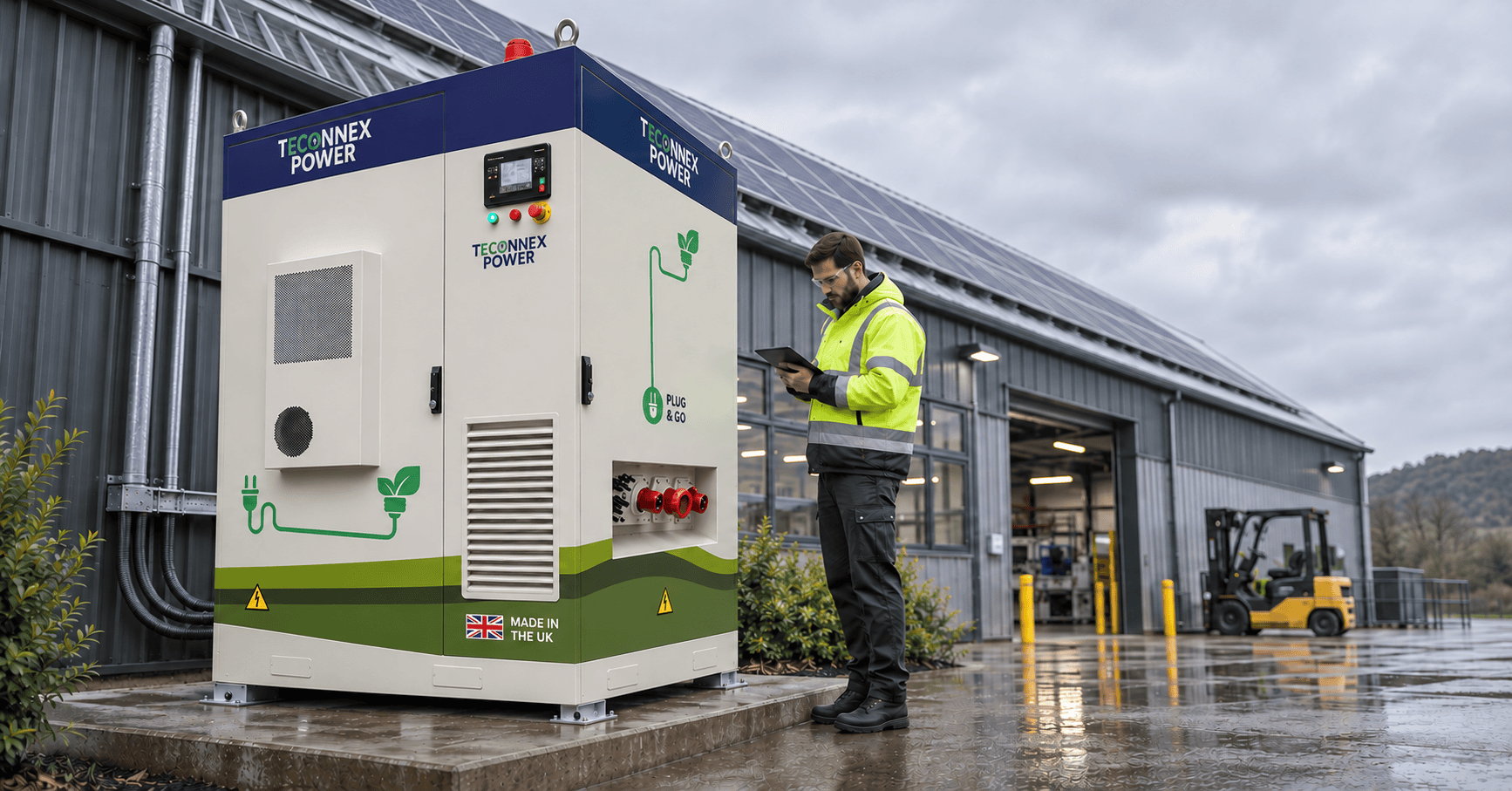
Most businesses don’t have spare plant-room space, so outdoor installation is often the practical choice. Look for:
- An IP55 (or higher) enclosure to protect against dust and water
- Climate control (an integrated HVAC system) to keep batteries at the right temperature, which protects performance and lifespan
- A wide operating range. Teconnex Power cabinets are rated from -20°C to +50°C.
- Easy handling. Forklift and crane-friendly designs cut installation time and cost.
5. Scalable capacity that grows with your business
Your energy needs today won’t be your energy needs in five years. A modular commercial battery storage system lets you start with the capacity you need now and add more later without replacing the whole installation.
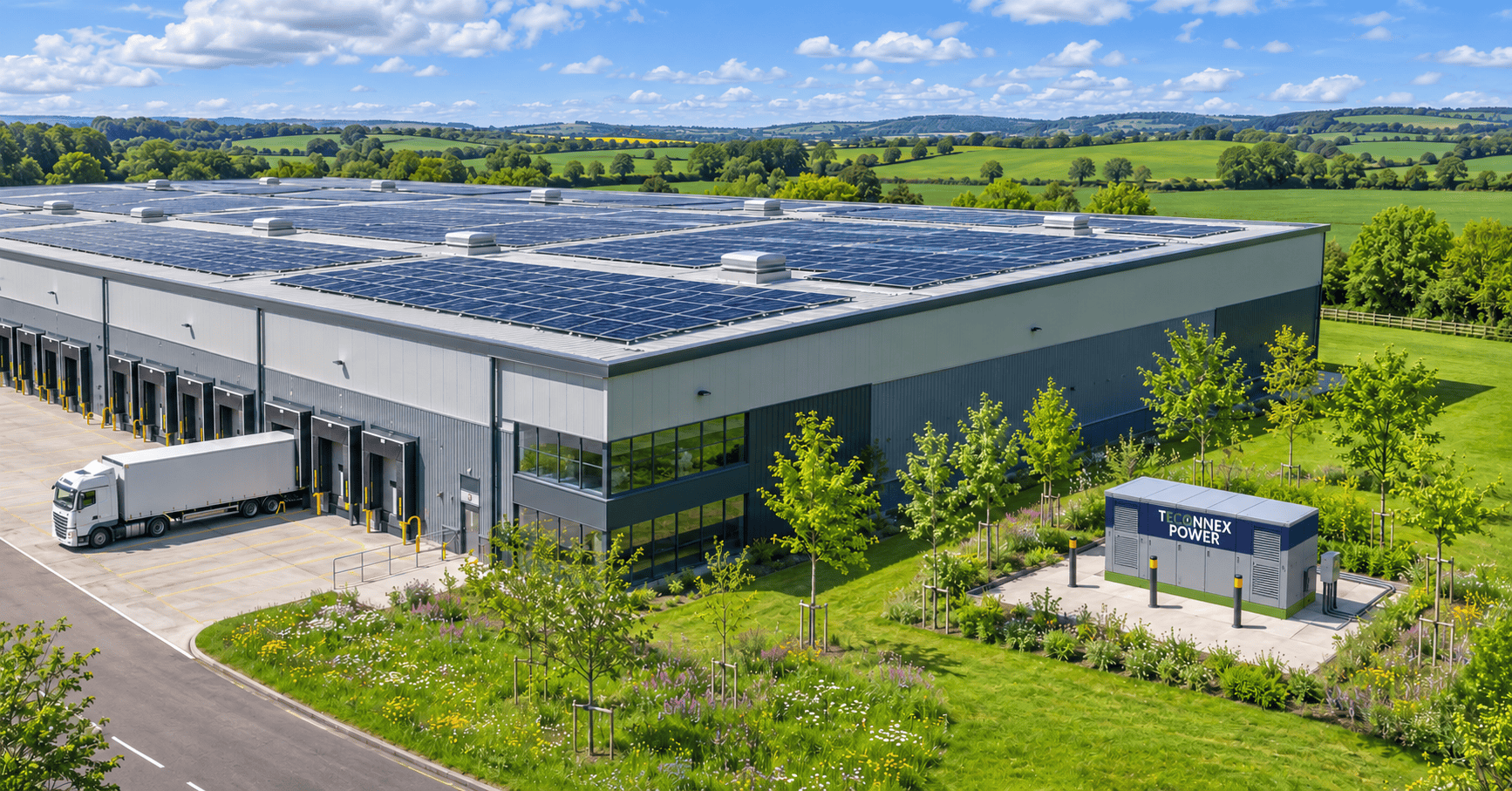
Teconnex Power ESS covers 25kWh to 1MWh, from compact outdoor cabinets for smaller sites through to containerised systems for large industrial users. The right size depends on your critical loads and how long you need to run them. A site survey is the best way to get this right. If your site is close to its grid connection limit, storage can also add power capacity without waiting for an upgrade.
6. Flexible energy inputs
The most useful systems work with the energy sources you already have, or plan to add. Check that the system accepts:
- Grid power
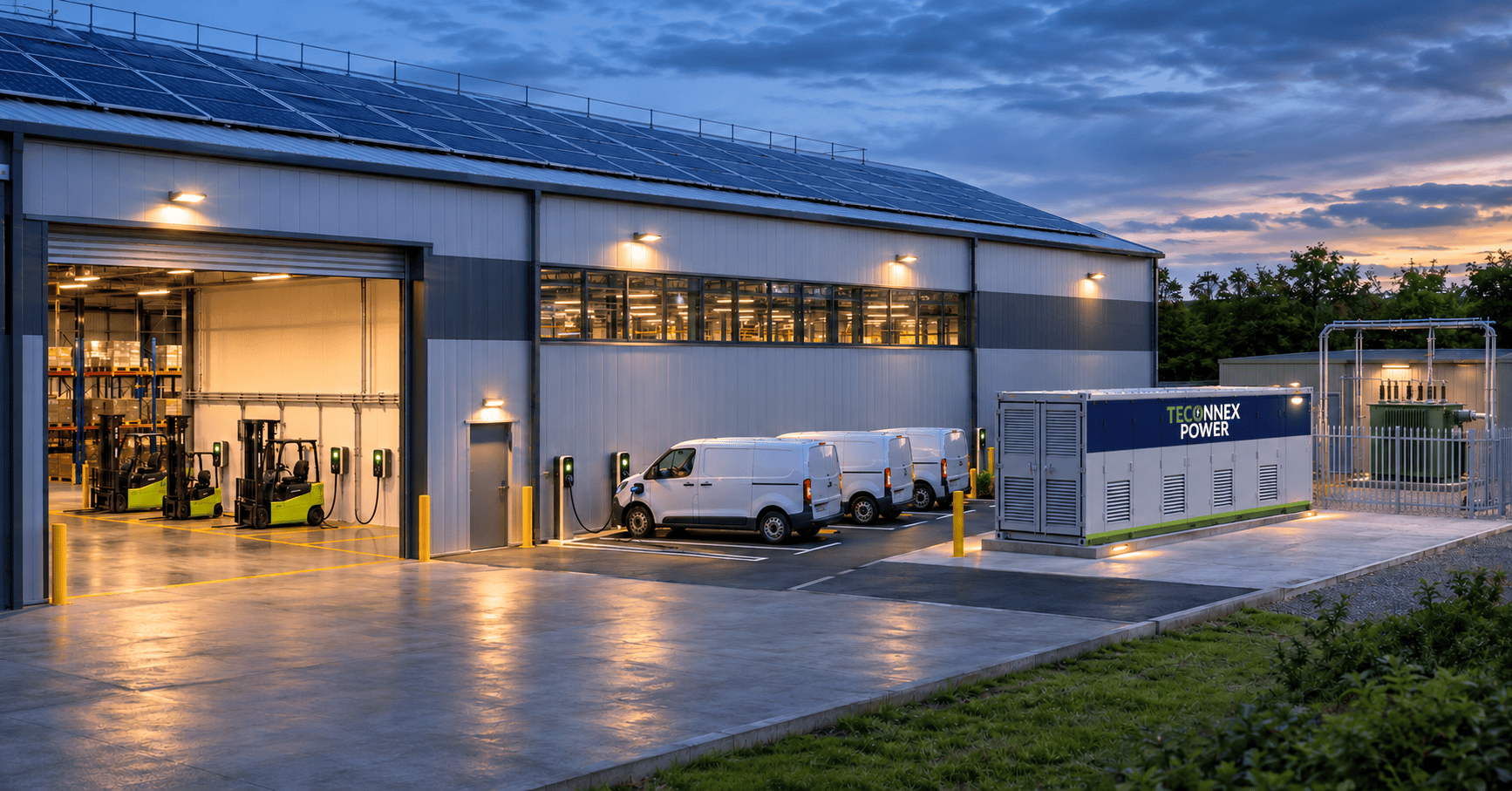
- Solar PV. Commercial solar battery storage lets you make better use of the solar you generate on site.
- Generators, for extended resilience
- Wind, where relevant
Hybrid operation means your battery, solar and generator work together as one system rather than as separate pieces of kit.
7. Intelligent monitoring and control
An energy management system (EMS) is the brain of any battery energy storage system. It should give you:
- Live system status, alarms and fault alerts
- Energy data and performance reporting
- Secure cloud-based remote access
- Supervision of auxiliary systems such as HVAC and fire safety
Teconnex Power systems use ComAp monitoring, a platform widely used across the power generation industry. Cyber security matters too, especially for sites connected to wider networks. Teconnex Power’s EMS is aligned with the IEC/ISA 62443 industrial cyber security standards.
8. Proper certification and UK grid compliance
Any commercial battery storage system connected to the UK grid must meet the right standards. Ask for evidence of:
- G98/G99 grid connection compliance
- IEC 62619 (safety of industrial lithium batteries)
- UN38.3 (lithium battery transport testing)
- BS 7671 (18th Edition wiring regulations)
- CE marking
Also check the manufacturer’s own quality systems. Teconnex is certified to ISO 9001:2015 and ISO 14001:2015, and every ESS goes through documented factory functional testing before it leaves site.
Why UK manufacturing and support matter
Buying commercial battery storage is a long-term decision, so think about who will stand behind the system once it’s installed. A UK-based manufacturer can offer faster support, easier access to spare parts and engineers who understand UK grid requirements.
Teconnex Power ESS units are designed and manufactured in the UK. Teconnex is an employee-owned engineering business with a heritage dating back to 1956. Teconnex Power support covers the full lifecycle:
- Consultation, system design and site surveys
- Installation, commissioning and user training
- Remote monitoring, telephone and on-site support
- Preventive maintenance and software updates
All systems carry a five-year warranty on the batteries and inverter, and one year on all other components.
What about savings?
A commercial battery storage system can help you make better use of on-site solar and reduce your reliance on the grid. But be wary of any supplier offering a fixed savings percentage or guaranteed payback period before they’ve looked at your site. Savings depend entirely on how and when your business uses energy, so the honest answer is that they vary from site to site. A proper assessment of your load profile is the only reliable way to estimate them.
Frequently asked questions
How does commercial battery storage work?
Commercial battery storage charges from the grid, solar PV or a generator and stores that energy in battery modules. An energy management system controls when energy is stored and released. If the grid fails, a static transfer switch moves essential loads onto battery power automatically, keeping critical operations running.
How much battery storage does my business need?
It depends on which loads you need to protect and for how long. A small site may only need to back up IT, refrigeration or security systems, while a factory may need to support whole production lines. Teconnex Power systems range from 25kWh to 1MWh, and a site survey will establish the right size.
Is commercial battery storage safe?
Yes, when it’s properly designed, certified and installed. Look for LFP battery chemistry, multi-level battery management, climate control, and integrated heat, smoke and gas detection with fire suppression. Teconnex Power fits fire suppression as standard on every ESS and tests each system before delivery.
Can commercial battery storage work with solar panels?
Yes. A hybrid system stores surplus solar generation so your business can use it later, rather than exporting it or losing it. Commercial solar battery storage also adds resilience, because stored solar energy can support your site during a grid outage.
Talk to the Teconnex Power team
If power resilience is on your agenda this year, we’d be happy to help. Our UK team can assess your site, identify your critical loads and recommend a commercial battery storage system sized for your business.
Email sales@teconnex.com or send us an enquiry to arrange a conversation with the Teconnex Power team.
Sources
- GOV.UK – NESO’s North Hyde report: government response (18 November 2025)
- Building – Lessons from North Hyde on systemic risk
- Electrical Review – Clean flexibility roadmap shifts from targets to delivery (14 July 2026)
- Electrical Times – Sites urged to test emergency power plans as disruption risks rise (15 July 2026)
Talk to our UK team
More news and guides